
Midsummer Night: Herbs and a Boat
"The night of Saint John predict the harvest, weddings, wheat, and corn." (Italian proverb)
The Litha or Calendimaggio period is a time of joy and fun, love and inner growth. It is also a time of divination! The Celts believed that the plants gathered during Litha had magical powers, particularly healing ones. This tradition is also found during the Night of St. John. The gathered plants would be used throughout the coming year to create protective amulets, good luck charms, healing ointments, and much more. For example, going to sleep with a bunch of herbs under the pillow would induce divinatory dreams. They were also essential during the lighting of sacred bonfires, in which propitiatory aromatic herbs were burned.

The "magical" herbs collected were:
• verbena, a bringer of abundance;
• St. John's wort, the miracle herb, or St. John's wort; St. John's wort, collected at noon on the solstice, was said to cure many ailments, while the roots collected at midnight drove away evil spirits. The Greek name hyperikon means "to protect" or "to defeat an apparition."
• thyme;
• marjoram;
• mugwort, which protects against the evil eye. According to Rolland, when collected on St. John's Day and woven into a garland, it protects the home from lightning and thieves;
• mistletoe, the plant sacred to the Druids, typical of the Solstice;
• fern, whose seed and flower (which in reality do not exist) are said to render one invisible, ensuring good earnings;
• marigold, which collected the sun's energy itself;
• Elderberry, another typical Solstice plant that, according to British legends, is said to bleed.
• Lavender: symbol of virtue and purity
• Mint: Madonna's herb, it perfumes and repels insects, purifies and ensures long life.
• Rosemary: symbol of good luck, it is said to ward off malice and envy.
• Walnut, a tree that is the quintessential embodiment of magic, was at the center of numerous rituals, as it was believed to be linked to spirits and the dead.
🌸 Beauty Ritual: How to Prepare St. John's Water
During the night of San Giovanni (St. John's Day), between June 20th and 23rd, San Giovanni water was prepared. At sunset, go out into the fields or your garden. Gather a bunch of wild herbs and flowers. Tradition dictates nine different variations: St. John's Wort (also called "St. John's Wort," as it flowers around June 24th. Believed to be a devil-chasing herb, legend has it that it has the ability to drive away evil spirits), lavender, mallow, rose, mint, sage, daisy, elderberry, and rosemary are essential. Place the flowers in a glass or ceramic bowl filled with fresh water. Allow the petals to float freely, creating a mosaic of colors. Leave the bowl outside overnight. It is essential that the water receives morning dew (the "guazza" of St. John), which, according to legend, has the power to fix the miraculous virtues of plants.
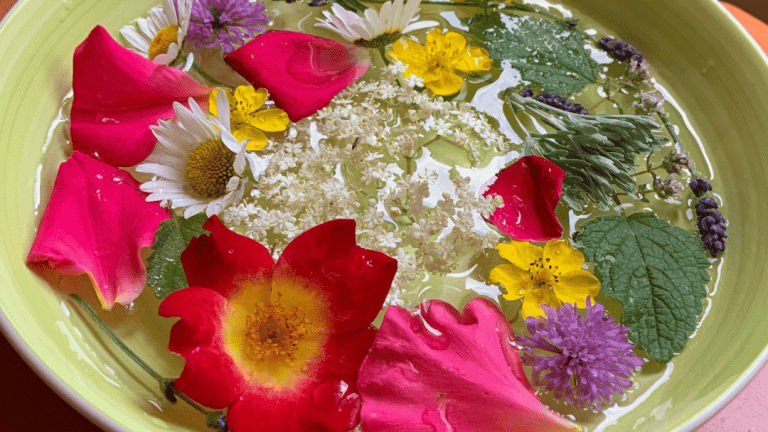
The Ritual Wash: On the morning of the 24th, use this scented water to wash your face and hands. This is a traditional propitiatory ritual, considered a gesture of purification, as the dew recalled the baptism of St. John the Baptist. Wetting your hands and face with this night's dew signifies rebirth and renewal. It is said to bring good luck, love, and health.
🌿 The Boat of Saint John/Pieter: Ancient Omens
Although tied to the night of June 28th (St. Peter's Eve), this tradition concludes the magical cycle of the solstice. It is an ancient peasant divination ritual to learn one's destiny or the progress of the harvest. It is particularly widespread in Northern Italy and in coastal areas like Salento. It is prepared by pouring egg whites into a container of water, left outside on the night of June 23rd (or 29th for St. Peter's Day). The egg whites coagulate and form sails that predict the weather, the harvest, or one's future love life. It is believed that the Saint (St. John or St. Peter) blows into the container, causing the egg whites to take the shape of a sailing ship or boat.
Here's how to perform it with your loved ones:
Take a clear glass jug or vase and fill it with fresh water. The Ritual: Gently pour an egg white into the water. Place the container outdoors (on the lawn, windowsill, or in the garden) overnight, allowing it to absorb the dew of St. John's Day. On the morning of June 24th (or 29th), observe the shapes. The egg white filaments will have risen, creating a structure reminiscent of the sails of a sailing ship.

Interpretation:
Sails unfurled and high? Good news, good fortune, and peaceful voyages await.
Sails closed or lowered? Bad weather is on the way; patience is needed and await better winds.
Other shapes, such as an egg or a tower, may have specific meanings related to pregnancy or other events.
Let us know if your "boat" sets sail! It's a wonderful way to connect with the rhythms of the earth and rediscover the wonder of our ancestors. Share it on the AnimaKeltia&Friends WhatsApp chat.
Sources:


Comments