
Saint Cecilia, Patroness of Musicians
Updated: 2 days ago
Today, we celebrate Saint Cecilia. But who was Cecilia? Why is she the patron saint of musicians?
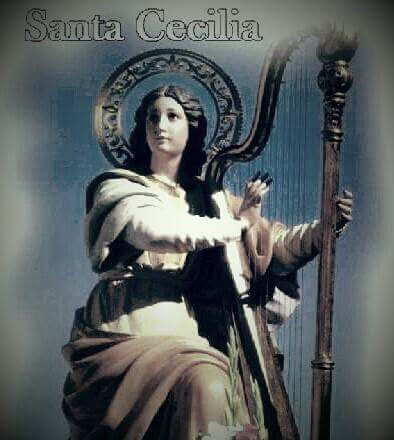
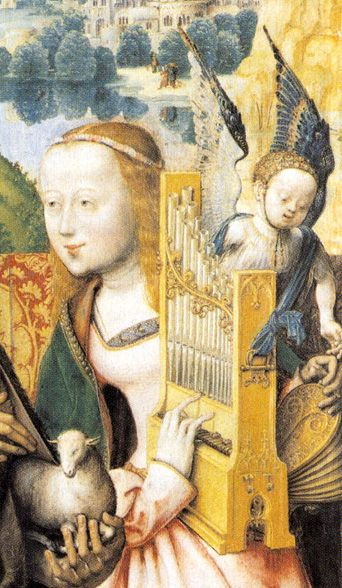
The cult of Saint Cecilia is very popular because she is the patroness of all those who play musical instruments and sing. The link between Saint Cecilia and music is documented in the late Middle Ages. It seems that this is due to a bad interpretation of the Antiphone of her Mass, more precisely the passage of her passion where it is said: "As the instruments played (cantantibus organ), Cecilia in her heart addressed her song to the Lord" In reference to the wedding music that Cecilia did not even listen to, taken to offer her virginity to God.
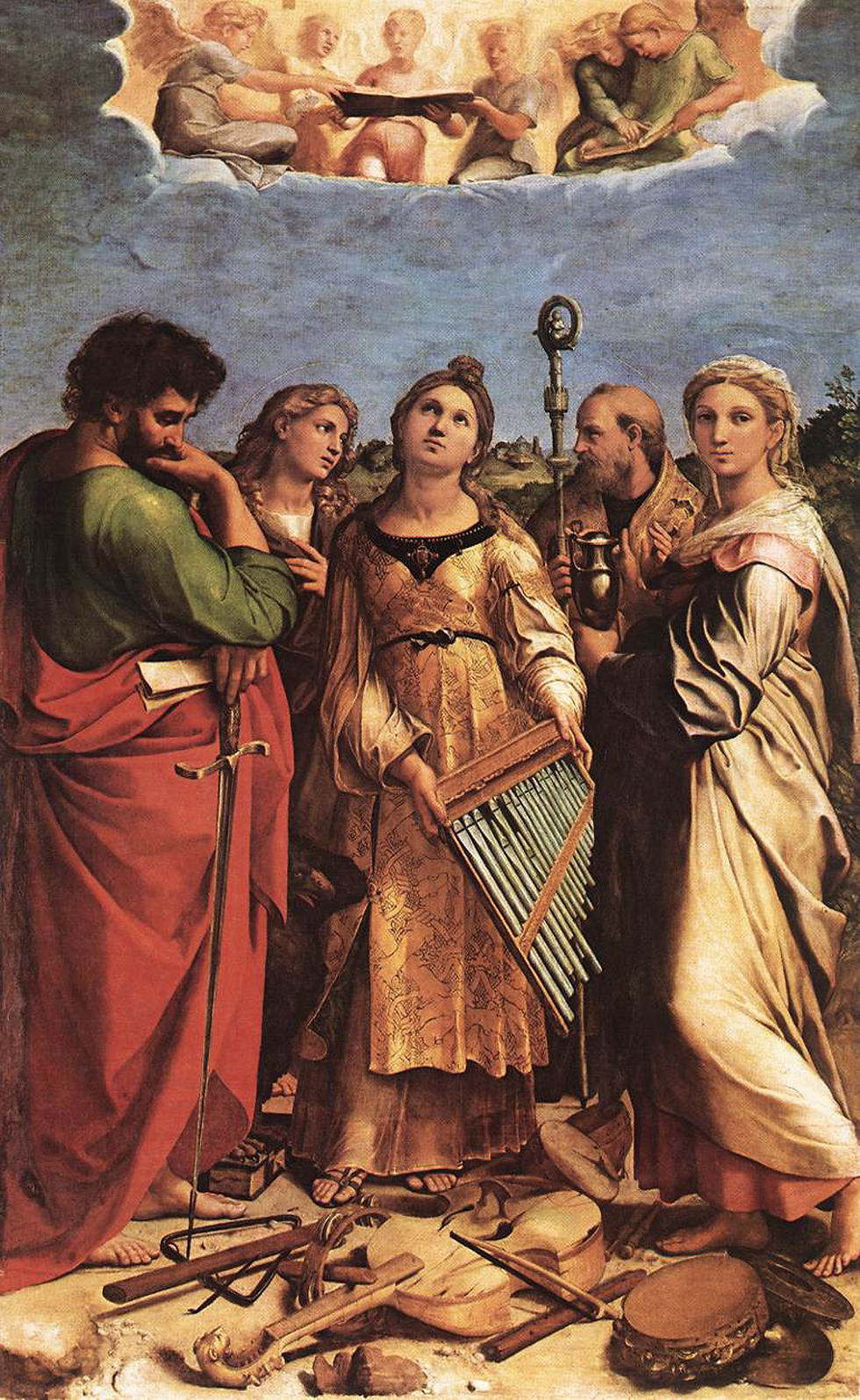
Thus, from the 15th century onwards, musical instruments became her characteristic attributes. Raphael’s painting depicting the *Ecstasy of Saint Cecilia*—commissioned by the Bolognese noblewoman Elena Duglioli dall'Olio—shows the saint gazing up at a sky filled with angels who are reading. At Cecilia’s feet, several musical instruments are depicted: a viola da gamba, three flutes, and a tambourine. The figure is accompanied by Saints Paul, John the Evangelist, Augustine, and Mary Magdalene.
Cecilia, born into a noble Roman family, was betrothed to the young pagan Valerian. It is said that she loved playing music. On their wedding night, the young woman revealed to her husband that an angel of God guarded her virginity and invited him to convert. That evening, Valerian met Pope Urban, who instructed and baptized him. Upon returning home, Valerian found Cecilia praying before the angel who had always watched over her. Now a convinced believer, the young man prayed that his brother Tiburtius might receive the same grace, and so it came to pass. However, the two brothers were soon denounced and condemned to be beheaded. Cecilia herself was summoned before the judge Almachius, who ordered her death. The executioners, not daring to carry out the sentence in public, attempted to suffocate her with the steam of the bath, but she was saved by a heavenly dew. An executioner was then called to cut off her head, but after striking her three times, he still failed to behead her...
The young woman died after three days of agony, during which time she converted her entire family to Christianity. Pope Urban I, her spiritual guide, had her buried in the Catacombs of Saint Callixtus, next to the "Crypt of the Popes." According to the *Golden Legend*, Pope Urban I—who had baptized Valerian and witnessed Cecilia's martyrdom—consecrated the noble Roman woman's house as a church, just as she had requested. Six hundred years later, in 821, Pope Paschal had her relics transferred to the crypt of the Basilica of Saint Cecilia in Trastevere. In 1599, during the restoration of the basilica commissioned by Cardinal Paolo Emilio Sfondrati for the Jubilee of 1600, the sarcophagus was discovered. It was opened, revealing the Saint's body in an excellent state of preservation, wrapped in a robe of silk and gold.
In the 1830s, the Cecilian movement emerged in Italy, France, and Germany; its members—musicians and scholars—aimed to restore the dignity of sacred music. Schools, associations, and periodicals dedicated to the study and dissemination of sacred music were established in Cecilia's name.
Sources:
http://www.musicalille.fr/Fete-des-musiciens-qui-etait-Saint-Cecile_a66.html
http://www.meteoweb.eu/2014/11/22-novembre-santa-cecilia-patrona-musica-dei-musicisti-dei-cantanti/355127/
http://www.ilsussidiario.net/News/Cronaca/2016/11/22/SANTA-CECILIA-Santo-del-giorno-il-22-novembre-si-celebra-la-patrona-di-Taranto/734173/
http://www.meteoweb.eu/2014/11/22-novembre-santa-cecilia-patrona-musica-dei-musicisti-dei-cantanti/355127/#wZQI1fOGIY0jqRmt.99
http://www.santiebeati.it/dettaglio/25350
http://www.mammaebambini.it/wp-content/uploads/2013/11/Preghiera-dei-Musicisti-3.jpg

